How GPS Broke Your Sense of Wonder (And What to Do About It)

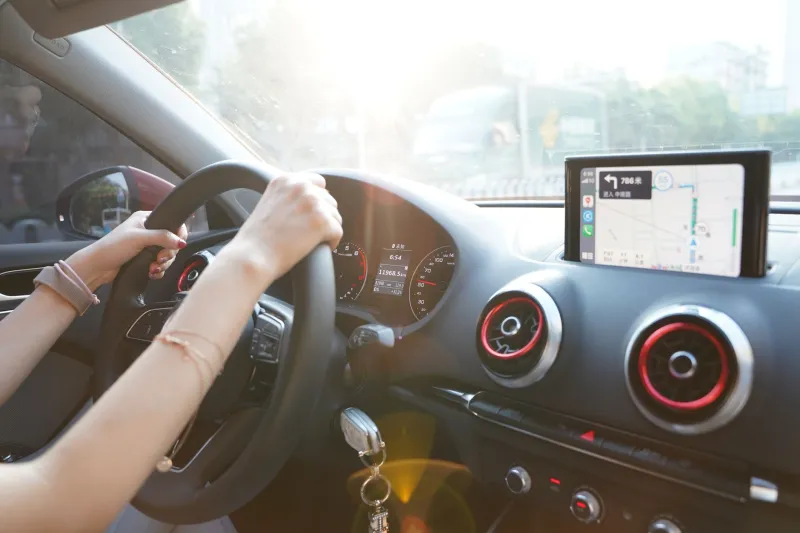
Let's be honest: you haven't actually read a map in years. You've glanced at a glowing blue dot on your phone, followed a disembodied voice through a series of left turns, and arrived somewhere — technically on time, technically at the right address — without ever really knowing where you were.
That's not navigation. That's being chauffeured by software.
And according to a growing chorus of cartographers, travel researchers, and people who've spent decades wandering the world with nothing but a compass and a hunch, this shift is quietly eroding one of the most important skills a traveler can have: the ability to get genuinely, productively lost.
The Precision Trap
Here's the paradox nobody in Silicon Valley is advertising: the more accurate your mapping app, the less you actually experience the place you're in.
"Turn-by-turn navigation essentially puts you in a tunnel," says Dr. Lydia Marsh, a cognitive geographer who studies how humans form mental maps of unfamiliar spaces. "You're moving through a place without building any spatial understanding of it. You know how to get from Point A to Point B, but you couldn't tell someone what neighborhood you passed through, what that interesting-looking alley was, or why one block felt completely different from the next."
This phenomenon has a name in academic circles: navigation-induced inattentional blindness. When your brain offloads the task of wayfinding to an external device, it essentially stops processing peripheral information. You stop noticing things. And in travel, noticing things is everything.
Think about the last time you stumbled onto something genuinely surprising — a taco stand tucked behind a parking garage, a mural you'd never seen photographed, a tiny bookshop that turned out to be your favorite hour of the whole trip. Chances are, you weren't following directions when you found it.
What Cartographers Actually Know That Apps Don't
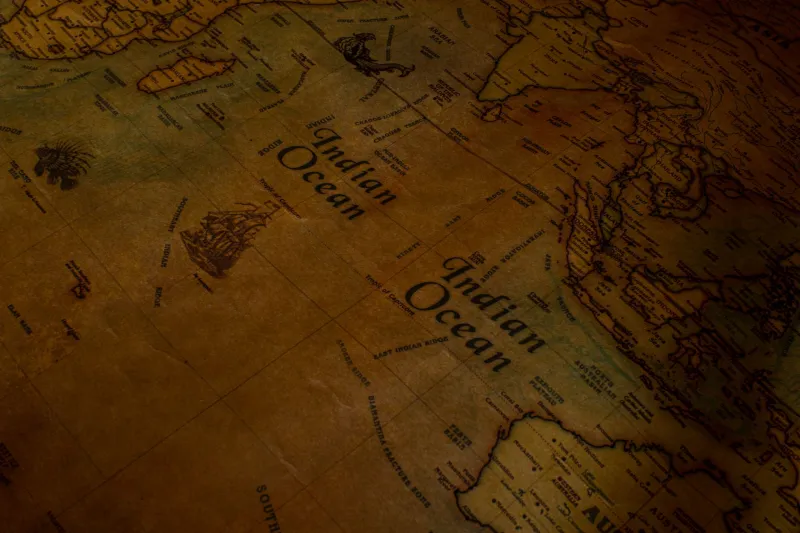
Professional mapmakers have been wrestling with a version of this problem for centuries. Every map is, by definition, a simplification of reality — a set of choices about what to include, what to omit, and what to emphasize. The best cartographers understand that a map's power lies not just in its accuracy, but in the gaps it leaves open.
"Old maps had errors, sure," says Marcus Veil, a historical cartographer based in Philadelphia who specializes in 18th and 19th century American exploration maps. "But those errors created curiosity. A traveler would look at a map, see something vague or unlabeled, and think: I want to know what's there. That's the engine of exploration. Modern apps have essentially eliminated that engine."
Veil points out that early American explorers — Lewis and Clark being the obvious example — weren't following a route. They were making one. Every day was an act of active interpretation, spatial reasoning, and genuine discovery. The map came after the journey, not before it.
Today, most travelers do the opposite. They map the entire trip before leaving the house, optimize the route, pre-book every stop, and then execute the plan like a logistics operation. The journey becomes a delivery service, and the traveler becomes the package.
The Skills You're Quietly Losing
Navigation isn't just about knowing where you are. It's a cluster of interconnected abilities — spatial memory, environmental awareness, the capacity to use landmarks, the instinct to orient yourself by the sun or the slope of a hill or the sound of water. These are skills humans have been developing for roughly 300,000 years. And they atrophy fast when you stop using them.
A 2020 study out of University College London found that people who rely heavily on GPS show measurably less activity in the hippocampus — the brain region responsible for spatial navigation and memory consolidation — compared to those who navigate independently. The researchers described it as a "use it or lose it" scenario with real cognitive consequences.
For travelers, the stakes feel especially high. "Your hippocampus is also where episodic memory lives," explains Dr. Marsh. "The memories of experiences, not just facts. So when you're not actively navigating, you may actually be forming weaker memories of the places you visit. You go somewhere, you follow the app, you leave — and it doesn't stick the way it would have if you'd had to figure it out."
That might explain why so many people come home from elaborate, expensive trips and struggle to describe what made them meaningful. The logistics were flawless. The experience was hollow.
Reclaiming the Art of Getting Somewhere the Long Way
None of this is an argument for throwing your phone into the Pacific. It's an argument for being intentional about when you use it — and building in deliberate space for the kind of unscripted wandering that actually produces stories worth telling.
Here are a few approaches that seasoned travelers swear by:
Drop a pin, then pocket the phone. Navigate to a general neighborhood or district, then put the app away. Give yourself an hour to explore without assistance. You'll be surprised how quickly your spatial instincts kick back in.
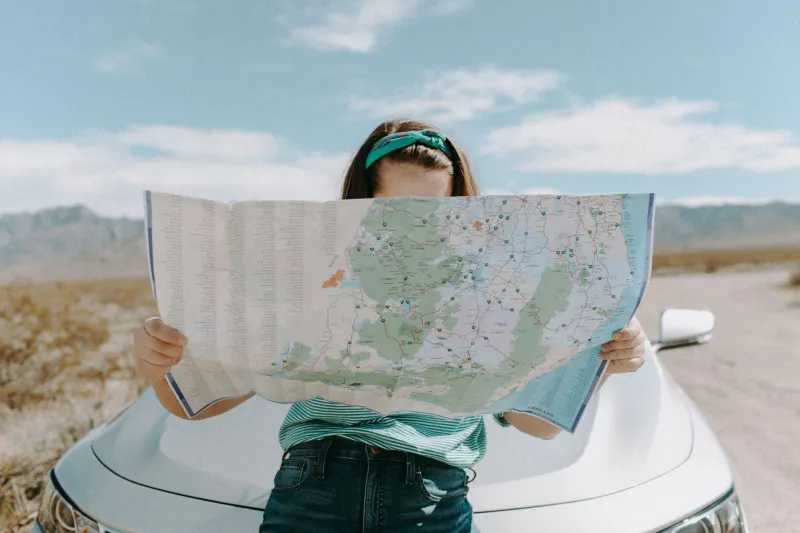
Use paper maps for the first morning. Seriously. Pick up a city map at the hotel desk, spread it out over coffee, and trace your rough intentions with a finger. The act of physically orienting yourself on paper activates a different kind of attention than swiping a screen.
Set a "wrong turn" rule. Any time you see something interesting off your planned route, you're required to follow it — even if it adds twenty minutes. Especially if it adds twenty minutes.
Navigate by landmarks, not street names. Pick a visible reference point — a church steeple, a water tower, a hill — and use it to anchor your sense of direction. This is how humans navigated for millennia, and it keeps you looking up instead of down at a screen.
Ask someone. This sounds obvious, but asking a local for directions is one of the most reliably interesting things you can do in an unfamiliar place. You might get bad directions. You might also get a restaurant recommendation that changes your whole trip.
The Map Is Not the Territory
There's an old philosophical phrase — originally coined by the Polish-American thinker Alfred Korzybski — that feels especially relevant here: the map is not the territory. The representation of a place is never the same as the place itself. And when we let the map become our entire experience of the territory, we lose something irreplaceable.
WonderMap exists on the premise that the best places aren't always the most pinned ones. They're the ones you find when you're paying attention, moving slowly, and staying genuinely open to surprise. That's not a technology problem. It's a mindset one.
Your phone is a tool. A good one, even. But the best trips aren't executed — they're discovered. And discovery, almost by definition, requires not knowing exactly where you're going.
Leave a little of the map blank on purpose. That's where the good stuff lives.