Rebirth at the Edge of Nowhere: The Fading Towns That Quietly Became Somewhere Worth Going
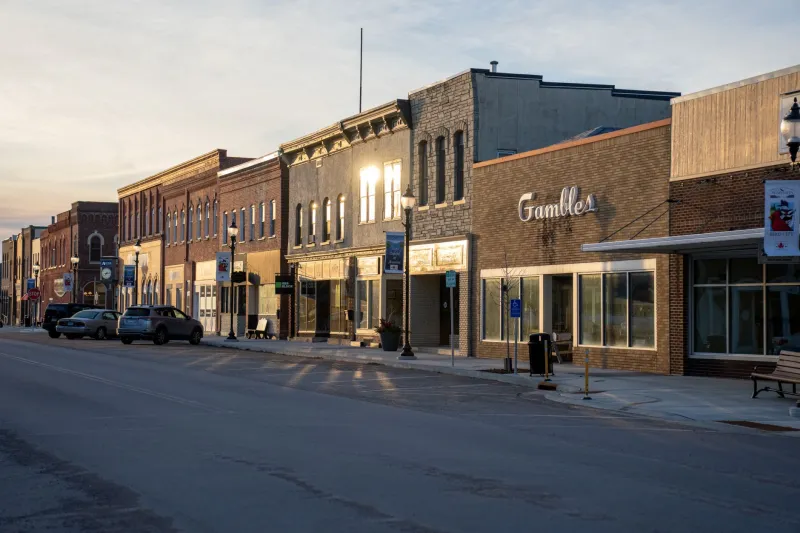
There's a particular kind of American town that shows up in census data as a warning sign. Population declining. Median age climbing. Businesses closing faster than they open. The local school consolidating with the next county over. These are the towns that economic development reports describe as "distressed" and that everyone who grew up there describes as "where I used to live."
Except something strange has been happening to some of them.
Not a rescue. Not a corporate relocation package or a government revitalization grant (though some of those have played a role). Something messier and more interesting — an organic accumulation of people who arrived for different reasons and ended up building something that nobody planned.
For travelers looking for places that feel genuinely alive rather than curated, these reviving towns are becoming some of the most compelling destinations in the country.
What a Ghost Town Looks Like Before It Comes Back
The towns in question aren't the dramatic, photogenic ghost towns of the American West — the ones with tumbleweeds and collapsed saloons that attract photographers and history buffs. Those places are frozen. The towns we're talking about were still technically alive a decade ago, just barely. They had a few hundred residents, a gas station, maybe a diner that was open three days a week, and a lot of empty storefronts with faded signs from businesses that had been gone for years.
They were the kind of places that longtime residents described with a complicated mix of love and grief — communities that had been something once and were in the process of becoming nothing.
Then the pandemic scrambled everything.
Remote Work as an Accidental Preservation Movement
When location stopped being a requirement for a large portion of knowledge workers, some of them started asking a question that hadn't been practically answerable before: what if I lived somewhere I actually wanted to live?
For a certain type of person, the answer pointed away from expensive cities and toward places with cheap real estate, low noise, and the kind of space that urban life makes impossible. Some of those people ended up in well-known rural retreats that quickly became overcrowded. But others found the genuinely overlooked places — the towns that weren't on any "best places to relocate" list because nobody had thought to put them there yet.
Marfa, Texas gets all the attention as an example of artistic rural revival, but Marfa has been famous for decades now and is priced accordingly. The more interesting story is happening in places like Paducah, Texas (different from Paducah, Kentucky — and yes, both are worth knowing about), or Elkins, West Virginia, or Bisbee, Arizona, or McCaysville, Georgia. Towns where the cost of entry was low enough to attract people who were willing to experiment.
What Actually Happens When the New People Arrive
The arrival of remote workers and artists in a struggling small town is not a simple story. It's rarely a harmonious one, at least not immediately. Long-term residents often have complicated feelings about newcomers who can afford to buy the property that locals couldn't and who bring different values, different aesthetics, and different ideas about what the community should become.
Those tensions are real and worth acknowledging. The most successful revivals — the ones that produce something lasting rather than just a wave of gentrification followed by another decline — tend to happen when newcomers engage seriously with existing community identity rather than trying to replace it.
In Greensburg, Kansas, which was largely destroyed by a tornado in 2007 and rebuilt as a green energy showcase, the recovery worked because it was driven by the people who were already there. In Marlinton, West Virginia, the outdoor recreation economy that's been slowly building around the Greenbrier River Trail is succeeding partly because it's creating jobs for local residents rather than just importing workers.
The distinction matters for travelers, too. A revived town that still has its original character is a completely different experience from one that's been hollowed out and refilled with something generic.
Reading a Town's Revival Before You Visit
If you want to find these places before they become the next Marfa — or before they appear on a "hidden gems" listicle that immediately makes them not hidden anymore — there are some signals worth watching for.
New creative businesses in old buildings. A ceramics studio in a former hardware store. A coffee roaster in what used to be a feed supply warehouse. These are signs that someone invested in a place without waiting for the place to be safe to invest in.
A farmers market that's been running for less than five years. New markets in small towns often indicate a critical mass of residents who care about local food systems — which usually correlates with a broader shift in community energy.
A local newspaper or newsletter that's active. Dying towns lose their local journalism first. Reviving towns often develop new independent media as part of their recovery. If a small town has a newsletter with actual reporting in it, someone cares enough to do that work.
Artist residency programs. These are often early indicators. Organizations that bring artists to rural areas tend to plant seeds that grow into galleries, studios, and eventually a creative economy.
Why These Places Matter to How We Think About Travel
The concept of a "hidden gem" has always been a little unstable. The moment a place gets labeled as one, it starts becoming something else. But the towns that are coming back from the edge of disappearance have a quality that's harder to erase than mere obscurity.
They've been tested. They know what it feels like to be forgotten. The people who chose to stay or chose to arrive knew they were betting on something uncertain. That shared experience of investment and risk produces a community character that's genuinely distinct — not manufactured for visitors, not optimized for Instagram, just real in the way that places are real when the people in them actually need each other.
For travelers who are tired of destinations that feel like theme parks of themselves, these reviving towns offer something different: the chance to see a place in the middle of becoming something. That process is messy and imperfect and sometimes uncomfortable, and it's also, if you pay attention, one of the most interesting things you can watch.
The WonderMap version of travel has always been about finding places that have something genuine to offer — not just a good photo opportunity or a famous landmark, but a real encounter with how people actually live. The towns coming back from the edge of nowhere are doing that in real time.
You might want to go before they figure out they're a destination.