Why Getting Lost Is Actually the Best Travel Strategy You're Not Using
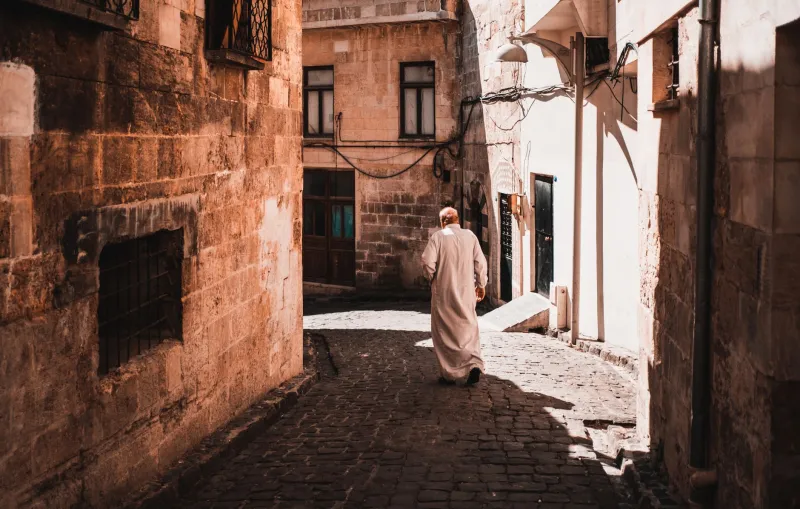
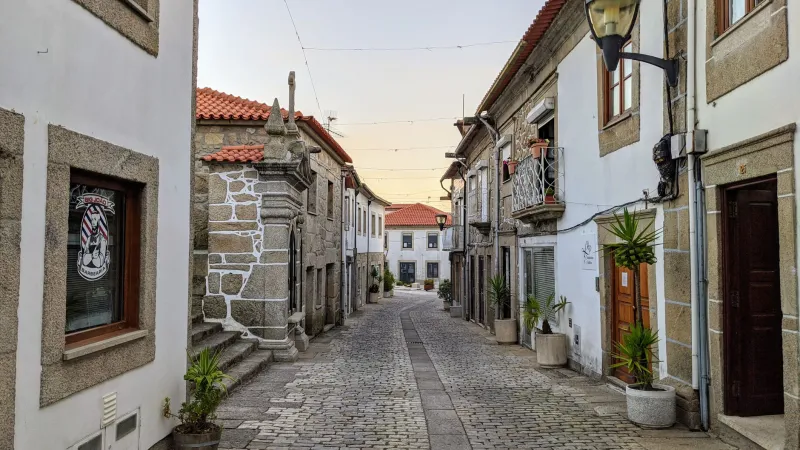
There's a moment every traveler knows. You've taken a wrong turn somewhere between the museum and the café your app recommended, and suddenly you're standing in front of a courtyard you can't find on any map — locals laughing over lunch, laundry strung between windows, a smell of something incredible drifting from a kitchen that doesn't have a sign. Nobody on the internet told you to be here. And that, it turns out, is exactly the point.
We've built a travel culture obsessed with optimization. Five-star itineraries. "Best of" lists. Curated walking routes designed to hit every photogenic corner in the most efficient order possible. And while all of that has its place, something quietly gets lost in the process — the very thing that makes travel feel alive.
Your Brain on Wandering
Neuroscientists have been studying what happens in the brain during unstructured exploration, and the findings are genuinely surprising. When we navigate familiar or pre-planned routes, we largely operate on autopilot — the brain's default mode network kicks in, and we stop paying close attention to our surroundings. But when we're genuinely uncertain about where we are? Everything sharpens.
"Novelty is one of the most powerful triggers for memory consolidation," explains research in cognitive geography. When your brain doesn't know what's coming next, it encodes experiences more deeply. That unexpected alley, that strange little shop, that conversation with a stranger who pointed you toward a neighborhood you'd never heard of — those moments stick precisely because they were unscripted.
This is part of why travelers often return home with vivid memories of the "wrong turn" moments and hazier recollections of the landmarks they dutifully checked off a list. The brain remembers what surprised it.
The Problem with Perfect Planning
Here's something worth sitting with: the more precisely you plan a trip, the more you've already decided what it will mean to you before you've even arrived.
Algorithm-driven travel planning — think Google's "Popular Times," curated Reels, and influencer itineraries — works by surfacing what's already been validated by massive numbers of people. Which means, almost by definition, it steers you toward the already-discovered. You're not finding hidden gems. You're joining a queue to experience someone else's discovery.
Urban planners have a term for the spaces that fall outside curated tourist circuits: "residual space." These are the neighborhoods, corners, and pockets of a city that don't make the highlight reel — not because they're uninteresting, but because they haven't been packaged yet. And residual space, paradoxically, is often where a place's actual character lives.
Take a city like Pittsburgh, Pennsylvania. Most visitors hit the Strip District, the Incline, maybe a Steelers game. But spend a wandering afternoon in Millvale or Lawrenceville without a destination in mind and you'll stumble onto murals, dive bars with incredible pierogi, and local conversations that reframe the whole city for you. That version of Pittsburgh isn't hidden — it's just not optimized for tourism.
Intentional Disorientation: A Practical Guide
The good news is that you don't have to throw your phone into a river to embrace this approach. Getting deliberately lost is actually a skill, and like most skills, it gets easier with practice.
Start with a radius, not a route. Instead of mapping a specific path, pick a general area — a neighborhood, a waterfront stretch, a block or two from your hotel — and commit to exploring it without a destination. Give yourself a time limit if that helps. One hour. No agenda.
Follow friction, not familiarity. When you hit an intersection, choose the street that looks a little less obvious. Not the one with the café awnings and tourist menus, but the one that curves away into something you can't quite see yet. Curiosity is a better compass than confidence.
Talk to people who aren't selling you something. The person walking a dog, the retiree on a bench, the shop owner who's clearly bored — these are your best navigational resources. Ask them where they'd eat lunch if they had an hour to kill. You'll rarely get a bad answer.
Let the map be a safety net, not a leash. Keep your phone accessible for genuine emergencies or to find your way back, but resist the pull to check it every few minutes. The anxiety of mild disorientation is part of the experience — it's what keeps you present.
What Seasoned Travelers Know That First-Timers Don't
Ask almost any veteran traveler about their most memorable trip moment and watch what happens. Rarely do they describe the thing they planned. More often it's the afternoon they missed a bus and ended up at a local festival, or the detour that turned into a three-hour conversation with a family who invited them for dinner.
These aren't accidents. They're what happens when you create the conditions for chance. You can't manufacture serendipity, but you can stop blocking it.
There's a concept in travel writing sometimes called "slow travel" — the idea of lingering in a place long enough to let it reveal itself on its own terms. Wandering without a plan is the spatial equivalent. You're not moving faster or slower; you're moving without a predetermined destination, which means every turn is a choice rather than a checkpoint.
The WonderMap Philosophy in Practice
At WonderMap, we talk a lot about hidden gems — but the truth is, most hidden gems aren't hidden from everyone. They're hidden from the algorithm. They exist in the spaces between the curated lists, in the neighborhoods that haven't been discovered by the right influencer yet, in the hours of a day when most tourists are following a schedule.
The travelers who consistently find these places aren't lucky. They're available. They've made room in their itineraries for the unplanned, the unexpected, the slightly inconvenient detour that turns into the story they tell for years.
Getting lost — really, deliberately, curiously lost — is one of the oldest and most reliable travel strategies in existence. It predates apps, guidebooks, and travel writing itself. It's what explorers did before there were maps, and what the best travelers still do today, even with a fully charged phone in their pocket.
The map is a starting point. The wandering is the trip.
Next time you're somewhere new, try this: pick a direction that doesn't show up on your itinerary, and walk until something makes you stop. Don't plan what that something will be. Just be ready for it when it shows up.